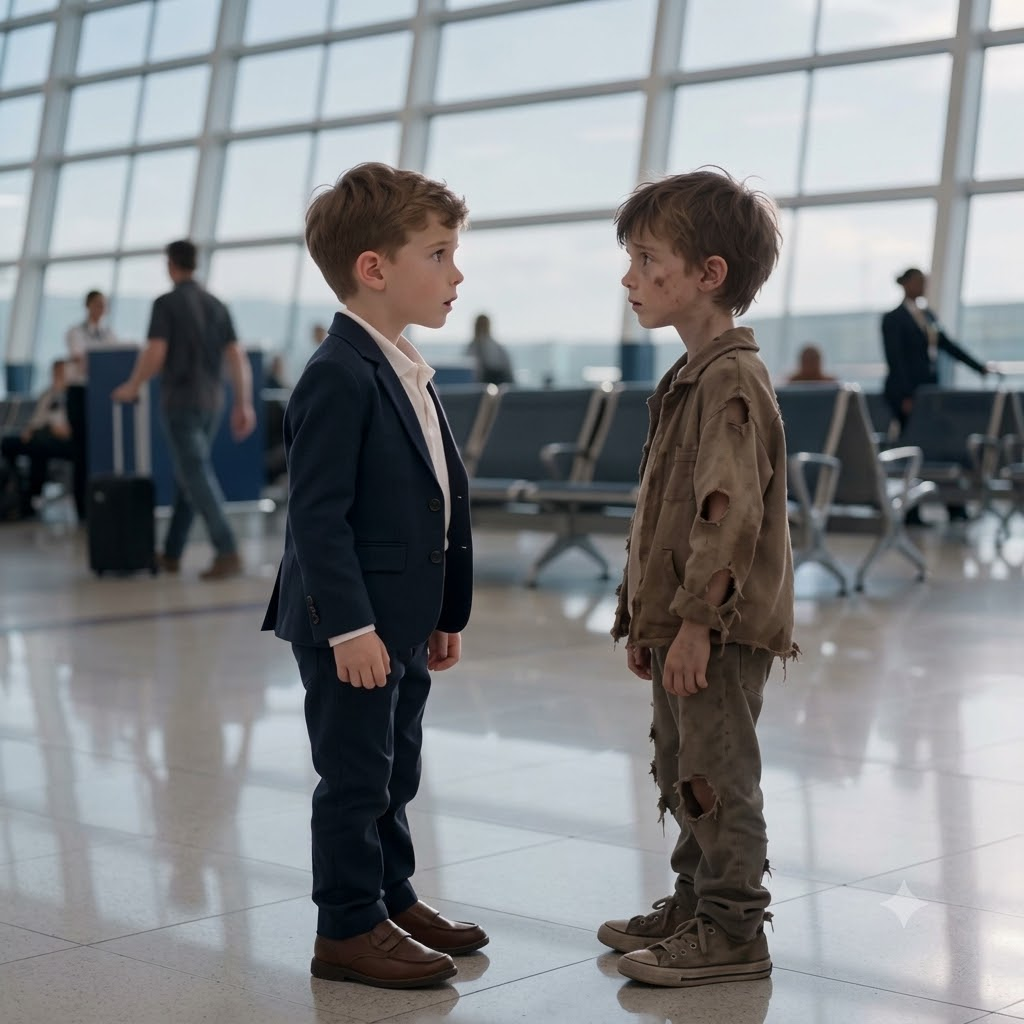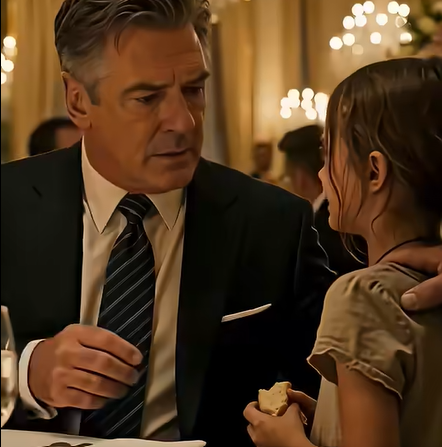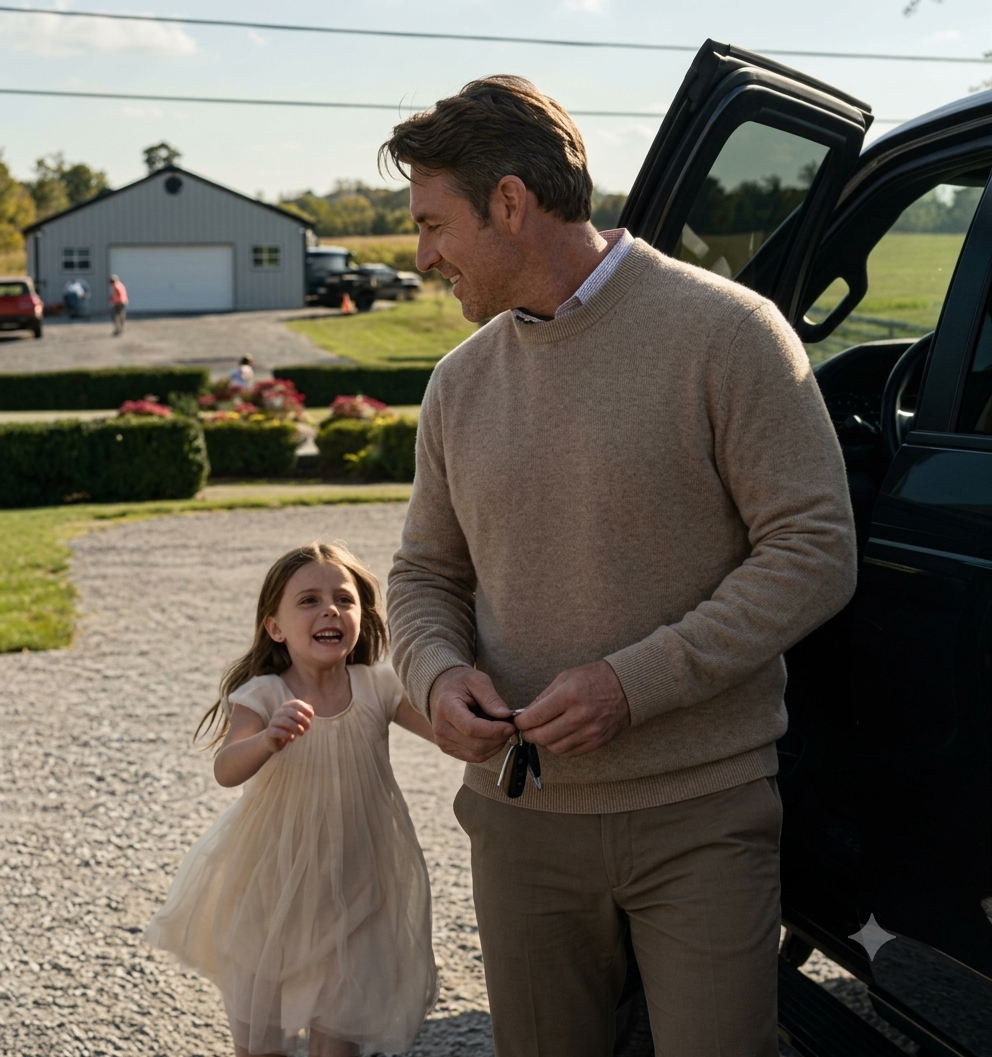
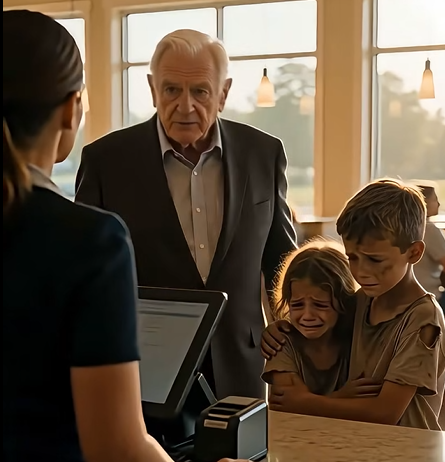
The elderly man held the photograph with both hands, his expression changing completely as he recognized himself more than thirty years earlier, holding a newborn baby girl. He looked at the boy and asked urgently, “Where did you get this picture?” The boy tightened his grip on his little sister’s hand and answered cautiously, “My mom kept it in her bag for years. Before she died, she told us that if we ever met the man in the picture… we should give it to him.” The man went completely still. He studied the little girl’s face, then looked back at the photograph, as if seeing familiar features he had spent a lifetime searching for.
He immediately pulled out chairs for the children and ordered more food. While the little girl ate hungrily, her older brother explained that their mother’s name was EMILY and that she had died a few months earlier after a long illness. The two children had lived with her in a cheap rented room, but after she died, their small savings quickly disappeared and they ended up living on the streets. The moment the man heard the name Emily, his hands began to shake. “Emily… did your mother have a small birthmark behind her left ear?” The boy nodded. The man turned away, fighting back tears, then whispered, “Emily was my only daughter.”
The boy looked at him with suspicion and asked the question that had troubled him for years. “If you really are my mom’s father… why did she have to live so poor?” The man did not avoid the question. He lowered himself to the children’s eye level and said, “Because I never knew your mother was alive. If I had known, I would never have let her live that way.” The boy still did not fully trust him. “Mom used to say rich people always find what they really want.” The words hit the man hard. He stayed silent for a few seconds, then said, “You’re right. And I’ve lived more than thirty years with a mistake I can never undo.”
The man finally told them what had happened. More than thirty years earlier, when Emily was only seven, a massive earthquake struck while she was staying with her aunt in another town. Buildings collapsed, entire neighborhoods were destroyed, and hundreds of people were separated during the evacuation. His voice broke as he said, “When your mother was seven, that earthquake took her away from me. They told me the building where Emily had been staying completely collapsed.” He paused, his eyes filling with tears. “After weeks of searching, I was told Emily was among those who didn’t survive. I never found her body… but eventually I believed my daughter had died in that earthquake.” He looked at the two children. “If your mother really was Emily… then you’re my grandchildren.”
The older boy immediately pulled an envelope from his worn backpack, the same one his mother had kept with the photograph. Inside were several unsent letters and a piece of paper with the man’s full name written on it. One letter explained that after the earthquake, Emily had been taken away by her aunt to live somewhere else. Throughout her childhood, she had been told that her father had stopped searching for her and no longer wanted her back. The man broke down as he read it. “I never stopped looking for you…” Only then did he understand what had happened: in the chaos after the disaster, he believed Emily was dead, while Emily grew up believing her father knew she was alive but had abandoned her.
The man immediately called his private attorney and ordered a full review of the rescue records and missing-person files from the earthquake. Less than an hour later, his assistant brought old archived documents. One detail changed everything: Emily had only ever been listed as missing. There was no official death certificate in her name. Another record showed that a girl of the same age had been taken out of the disaster zone by her aunt a few weeks after the earthquake, but the new address was never forwarded to the girl’s father’s family. The man finally understood that his daughter had not died. She had survived, but had been taken away during a time when communication systems and official records were in complete chaos. He looked at the two children and said, “Your mother wasn’t abandoned by me. She spent her whole life trapped inside the same misunderstanding I was living in.”
That evening, after the children had eaten and been taken somewhere safe, the man sat beside them in a hotel room. The little girl had fallen asleep against her brother’s shoulder, while the boy still held the old photograph in his hands. The man said softly, “I can’t get back the years I lost with your mother.” The boy remained silent. He continued, “But if you let me, from today on, I won’t let either of you sleep on the street again.” The boy asked quietly, “Are you doing this because you feel guilty… or because we’re family?” The man looked at the photograph and replied, “Because you’re the last part of my daughter that I still have.” The boy did not call him Grandpa. He simply placed the photograph slowly into the man’s hands. But when the man stood up to leave the room and let them rest, the boy suddenly whispered, “Could you stay for a little while?” The man turned back, his eyes red with tears, and quietly sat down again. After more than thirty years of believing he had lost his daughter in an earthquake, he had finally found the family she left behind—only because two hungry children walked into the exact restaurant where he happened to be sitting.